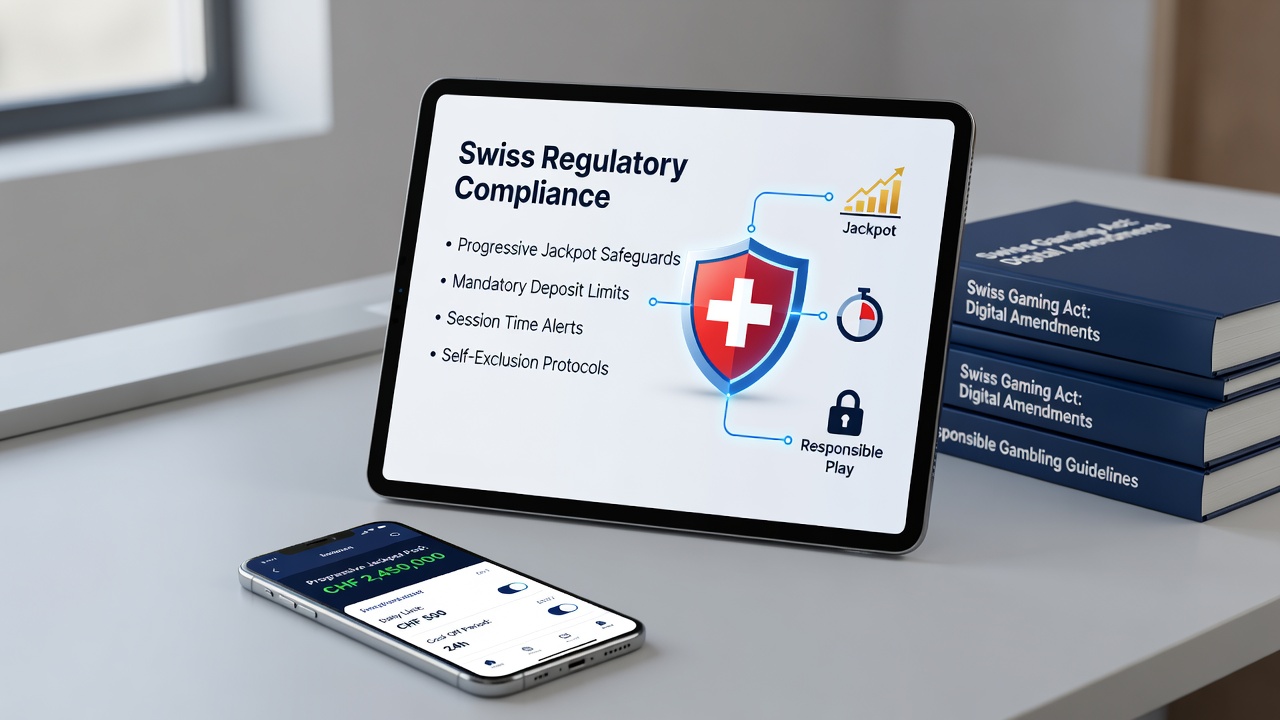
Switzerland's Legal Framework Directing Mobile Application Capabilities in Progressive Jackpot Offerings and Tools Promoting Responsible Play
Switzerland's Federal Act on Gambling, which entered into force in 2019, establishes clear boundaries that licensed operators must follow when designing mobile applications for progressive jackpot systems and responsible play instruments, and this framework continues to evolve with specific implementation deadlines approaching in August 2026. The law requires all online gambling platforms, including those accessed via smartphones and tablets, to integrate features that prevent unauthorized access to jackpot pools while embedding mandatory player protection mechanisms directly into the user interface.
Core Requirements for Progressive Jackpot Integration
Operators must ensure that progressive jackpot contributions remain confined to players located within Switzerland, and mobile apps achieve this through geo-location verification that activates before any wager contributes to a shared prize pool. Research from the Swiss Federal Gaming Board indicates that such restrictions reduce cross-border leakage, while app developers incorporate real-time IP checks alongside device fingerprinting to maintain compliance during jackpot accumulation phases. Those who design these systems often combine server-side controls with client-side prompts that notify users when their location falls outside permitted zones, and this dual-layer approach prevents jackpot eligibility disputes.
Updates scheduled for August 2026 will require apps to display jackpot growth rates in standardized formats that include historical payout data, and this change aims to give players transparent information without encouraging excessive participation. Industry reports show that mobile interfaces already limit jackpot visibility to logged-in, verified accounts, which eliminates anonymous browsing of prize pools that could otherwise bypass age or self-exclusion checks.
Embedding Responsible Play Instruments in Mobile Interfaces
Swiss regulations mandate that every licensed app include deposit limits, loss limits, and session time reminders that users cannot disable, and these tools must activate within the first three minutes of gameplay. Data from the Federal Office of Justice reveals that operators who integrated these features at the account creation stage saw higher compliance rates compared with those who offered them only as optional settings. Mobile developers therefore build persistent menus that surface limit adjustments alongside jackpot participation buttons, ensuring players encounter protection options before committing funds to progressive games.

Self-exclusion registries connect directly to app authentication systems, and once a player registers for exclusion the mobile software blocks both jackpot access and general login attempts for the chosen period. Observers note that push notifications reminding users of their remaining session time or current spending totals have become standard, since the 2019 legislation treats these alerts as essential rather than optional enhancements. In practice, apps combine these alerts with reality-check pop-ups that pause gameplay until the user acknowledges the message, and this design prevents continuous play without periodic reflection.
Technical Specifications and Data Handling Rules
Because Swiss data protection standards intersect with gambling rules, mobile applications must encrypt all transaction and gameplay logs before transmission to central servers, and operators face audits that verify these encryption methods meet federal benchmarks. Figures released by the Swiss Federal Council demonstrate that platforms using end-to-end encryption experienced fewer incidents of data exposure during the initial years of regulated online gambling. App architects therefore route jackpot contribution calculations and responsible play logs through the same secure channels, which streamlines compliance while reducing separate data silos.
Testing protocols require independent verification of both jackpot fairness algorithms and responsible play triggers before an app receives its operating license, and this process typically spans several weeks of simulated user scenarios. Those who conduct such tests often replicate real-world network conditions to confirm that location services and limit enforcement function correctly even during connectivity fluctuations.
Future Adjustments Scheduled for August 2026
Authorities have announced that beginning in August 2026, mobile applications must support automated generation of monthly activity reports that detail jackpot contributions alongside limit adherence metrics, and these reports will be available for download directly within the app interface. This requirement builds on existing transparency obligations while extending them to portable devices that now account for the majority of player interactions. Operators are preparing backend systems that compile this data without additional user input, thereby maintaining seamless experiences while satisfying regulatory reporting demands.
Collaboration between the Swiss Federal Gaming Board and software providers continues to refine how progressive jackpot pools display contribution percentages from Swiss players only, and this focus prevents dilution of prize information with international data that falls outside legal scope. External analyses from the Federal Act on Gambling documentation confirm that such geographic segmentation remains a cornerstone of the licensing regime.
Conclusion
Switzerland's regulatory structure shapes mobile app development for progressive jackpots and responsible play tools through mandatory technical controls, location verification, and integrated protection features that licensed operators must implement uniformly. As August 2026 approaches, forthcoming reporting and display standards will further standardize how these elements appear on smartphones and tablets. The framework prioritizes player location accuracy, data security, and automatic access to limit-setting functions, ensuring that jackpot participation occurs within clearly defined legal parameters while responsible play instruments remain constantly available. Observers continue to monitor how these rules translate into updated app versions that balance entertainment features with compliance obligations across the Swiss market.